
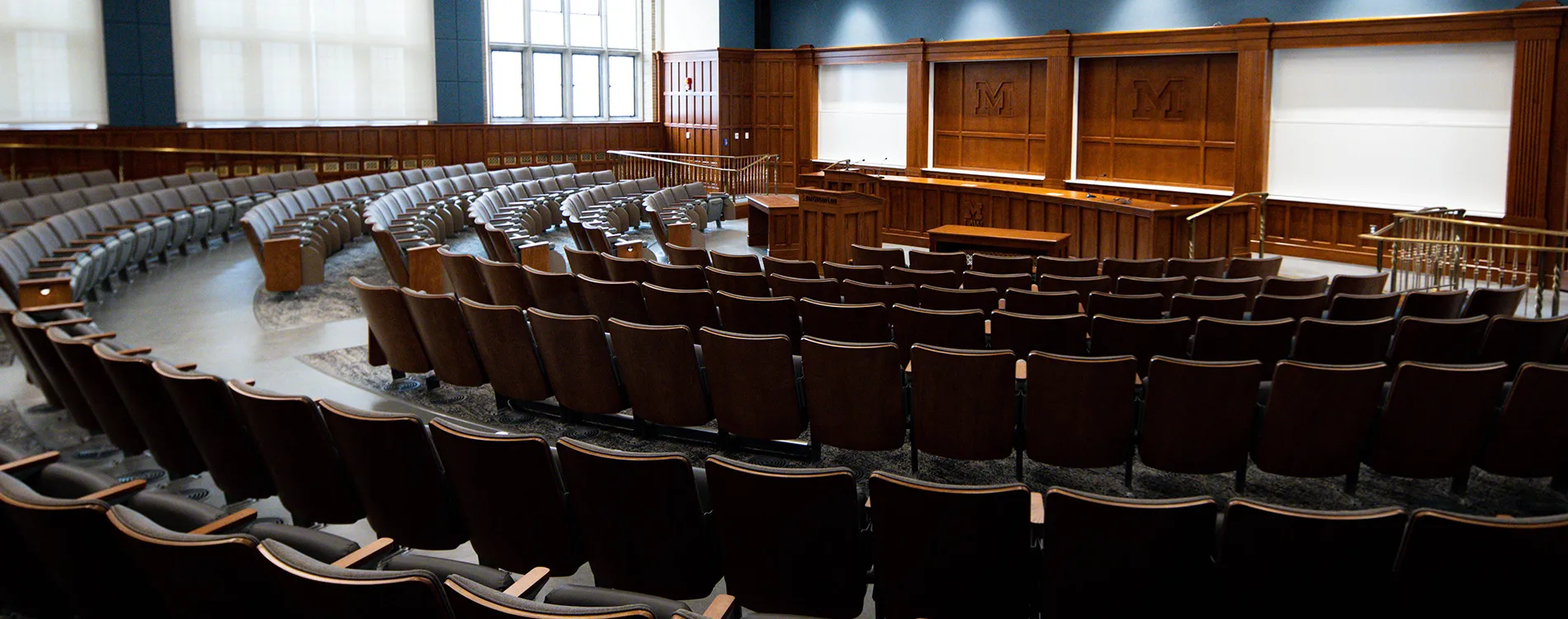
The Michigan Law community welcomes four new fellows to the faculty this fall, bringing diverse backgrounds encompassing history, literature, and hands-on legal work.
Beck Boorstein and Michael Menna are serving under the Law School’s Michigan Faculty Fellows Program, while David Fegley, ’20, and Stone MacBeth are clinical fellows.
Michigan Faculty Fellows essentially work as professors in training, gaining experience in teaching and research while becoming embedded in the Michigan Law and broader University of Michigan communities for a two-year term. This year, both Michigan Faculty Fellows bring an academic background in the humanities to their legal work.
Clinical fellows typically teach in one of Michigan Law’s legal clinics, while they also work directly with clients of the clinic. Both of the new clinical fellows hope to gain teaching experience that will lead to permanent positions as clinical professors.
“Michigan values rigorous, substantive scholarship, and we have been delighted to establish a fellowship program that helps to mentor rigorous, substantive scholars as they launch their academic careers,” Associate Dean for Faculty and Research Leah Litman, ’10, said. “Having new scholars in our community also helps make our community more vibrant and brimming with new ideas.”
Meet Beck Boorstein
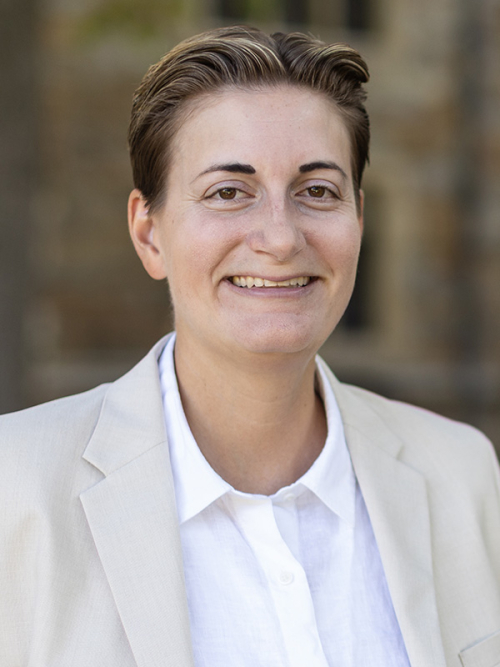
Boorstein developed an interest in the law at a young age, and their college education also encompassed history and English. A clerical job at a small-town law firm rekindled that legal interest and led to a JD from the University of Chicago. They also pursued a PhD in history from Yale.
Boorstein’s professional interests include disability rights, administrative law, labor law, and public health. They use legal history to examine alternative approaches to rights conflicts and the limitations of antidiscrimination law.
“This is a really exciting place for me to synthesize those doctrinal areas,” Boorstein said. “I am hoping to take the large body of work that I created in the historical academy and translate it into something very meaningful in the present moment.
“Many times when I was conducting research, I felt the relevance of what I had found in the past to controversies that were ongoing in the present. To have the opportunity to let the material breathe and bring it forward into the present is really exciting.”
Boorstein also looks forward to developing as an educator. “The fellowship is such a fantastic opportunity, not only to write in a collaborative environment but also to hone my teaching skills,” they said.
“The opportunity to join such a collegial faculty whose research interests are very broad, but also closely align with mine, is really important. Michigan is uniquely situated to provide me with that type of mentorship.”
Meet Michael Menna
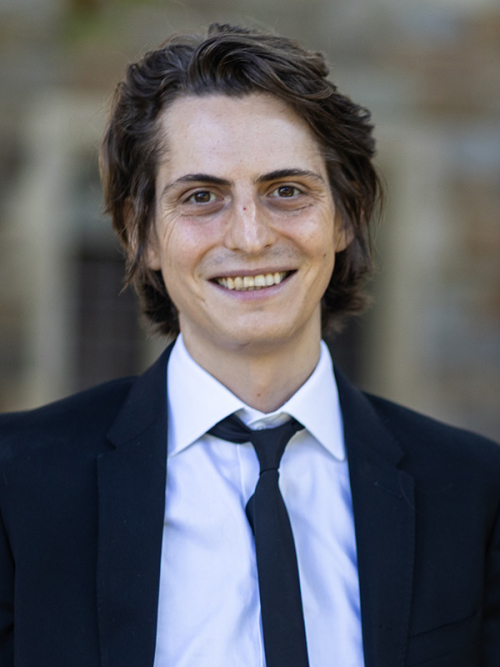
Menna was initially drawn to the law through a longstanding interest in the shortcomings of copyright regulations. More recently, his pursuit of a PhD in English at Stanford focused on the ways that popular entertainment was regulated in Shakespeare’s time—and that led him to enroll in law school as well.
“Being invested in the history of Shakespeare and his contemporaries and the ways that they shared information, I realized that had a contemporary social relevance,” Menna said. “The law allows me to investigate those academic interests in an interdisciplinary, historically minded, and socially conscious way.”
Menna was drawn to Michigan Law partly because of Ann Arbor’s appeal, but largely because of the entire University’s interdisciplinary approach. “Michigan affords a unique opportunity to meld literature and the law,” he said.
“Here at Michigan Law, there’s a default to embrace interdisciplinary research that you don’t find everywhere. The faculty is welcoming of different methodologies in exciting ways—and in my particular area of intellectual property law, the professors here are the best at what they do.
“What is exciting to me here is the sense that the faculty really do treat us as peers and colleagues in their community and encourage us to collaborate. But they give us guidance, too; those are not mutually exclusive.”
Menna hopes to use his time at the Law School to write about the way copyright law treats “memory institutions” such as the Internet Archive, where he has worked. “I’ve been lucky to do a little bit of legal scholarship in the past, but I’ve never been given the space to really grab that sort of mission with the full intention that I have here,” he said.
Meet David Fegley
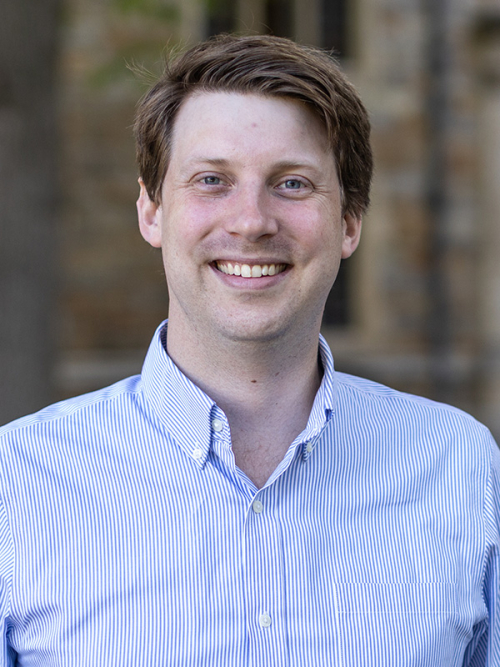
As a Michigan Law student, Fegley took the Unemployment Insurance Clinic (now the 1L Advocacy Clinic), the Civil Rights Litigation Initiative (CRLI), and the Pediatric Advocacy Clinic. This fall he returns to CRLI as a fellow, following his work as an associate at Salvatore Prescott Porter & Porter, where he focused on employment discrimination and prisoner litigation.
“I initially came to Michigan Law hoping that I would be able to do the sort of impactful legal work that could help promote justice and improve people’s lives,” he said. “When I got here, I found a real home in the public interest community.”
He and his family made Ann Arbor their home, and while he was practicing law, Fegley started giving some thought to the idea of returning to the Law School to teach. When an email to CRLI alumni mentioned an open fellowship position, everything fell into place.
Now he’s looking forward to developing as an educator and experiencing another side of academia, “while still being able to practice and guide students in civil rights advocacy and litigation.” In particular, he hopes to help students improve their legal writing.
“We have 12 students this semester, and it’s such an exciting, energetic, thoughtful, and deeply committed group,” he said. “These students really care about civil rights. They really care about their clients and are so dedicated to helping them reclaim some measure of the justice and dignity they’ve been denied.”
Fegley noted that one appealing aspect of CRLI is its wide variety of cases—such as First Amendment retaliation, discriminatory housing practices, and immigration issues. “The chance to take on and work with students on such a variety of cases that they’re passionate about makes for a really special experience,” he said.
Meet Stone MacBeth
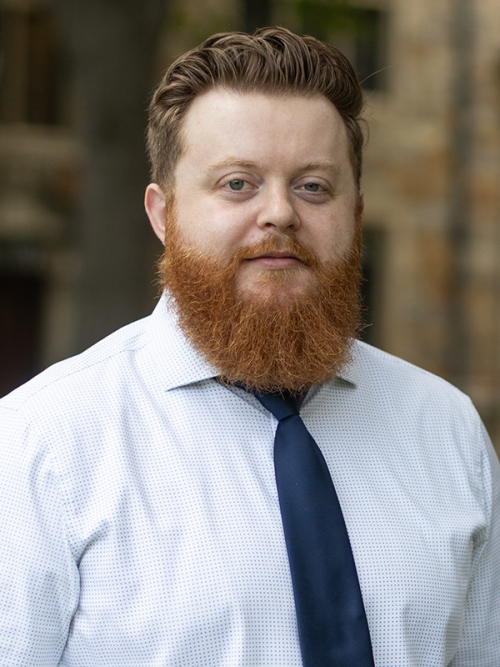
MacBeth joins the Civil-Criminal Litigation Clinic from a previous role as a staff attorney for the Bronx Defenders. Before that, he worked as a public defender at the Public Defender Service for the District of Columbia. He also has experience teaching at Columbia Law School and the Cardozo School of Law.
MacBeth earned his JD from the University of Colorado School of Law, where he found his place among the public defense community—working as a student-attorney in the Criminal and Immigration Defense Clinic, serving as a team leader for the Korey Wise Innocence Project, and interning with the Colorado State Public Defender.
A native of Michigan, MacBeth welcomed the opportunity to return home and join an established, supportive program. Now he is working to expand the Civil-Criminal Litigation Clinic’s criminal defense practice.
“One of my goals is to establish a pipeline for criminal defense cases to come into the clinic,” he said. “I’m currently establishing a more direct line of communication between the clinic and the public defender office, so that there’s a chance for us to get cases earlier and more frequently.”
MacBeth also hopes to help students develop their trial and advocacy skills—in their own individual voices. And he wants to broaden his own perspective as a practicing lawyer.
“We do a whole range of things in the clinic—landlord-tenant, civil liability claims, contract claims, all kinds of different things that I typically don’t do,” he said. “This position will enable me to keep doing public defense while also expanding my skill set to civil work.”