

Annually, the University of Michigan’s Graham Sustainability Institute selects graduate students from across 12 U-M schools and colleges to participate in the Dow Sustainability Fellowship Program. This year, the cohort includes five students from the Law School.
The 2026 class of fellows, which was announced in the spring, is currently working on their team-based projects for an array of community partners. Among the 32-person cohort are third-year Michigan Law students Sarah Bazzi, Liesl Bogaard, Drew Cox, Simran Kadam, and Joshua Messe.
Since its inception in 2013, the program has cultivated sustainability leaders through hands-on, interdisciplinary, collaborative project experiences with external partners, including nonprofit organizations, government agencies, businesses, and communities. Additionally, each fellow receives a $25,000 stipend.
Meet the Law School’s 2026 Dow Sustainability Fellows
Sarah Bazzi, 3L
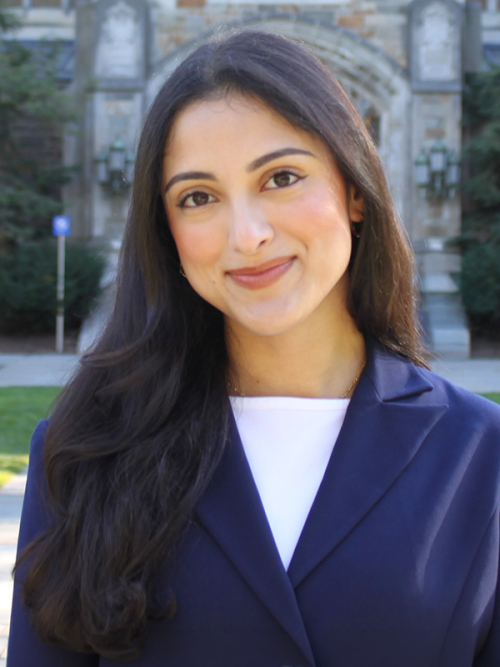
Sarah Bazzi is working with the Bailey Park Neighborhood Development Corporation, a group on Detroit’s east side that provides social and professional services to the local community. Her group’s primary objective is to create an environmental justice framework for Detroit’s McDougall-Hunt neighborhood, where residents face challenges like poor air quality from nearby industrial activity and the I-94 corridor, recurring basement flooding, lead service line concerns, and limited access to emergency resources.
Bazzi studied health and human services with a public health concentration as an undergraduate, a field she chose because of her upbringing in Dearborn, Michigan.
“Growing up, I witnessed stark environmental inequities,” she said. “While much of the city thrived, the south-end community suffered some of the state’s worst air pollution due to nearby industrial plants. Poor air quality prevented children from playing outside, and many developed high blood lead levels at the mere ages of four and five.”
While at Michigan Law, Bazzi has participated in the 1L Advocacy Clinic and the Zell Entrepreneurship Clinic, served as president of the Middle Eastern and North African Law Students Association, and currently serves as managing articles editor of the Michigan Journal of International Law, all of which she said improved her ability to lead across different perspectives and effectively communicate complex issues.
This semester, Bazzi is a graduate student instructor for Food Security and Food Assistance in the US, a course at U-M’s School of Public Health that she said “ties directly to the structural barriers to basic resources at the core of our work in McDougall-Hunt.”
She added, “The law is often underutilized as a tool in public health, but it can be a very powerful catalyst for change. Being able to do this work in Detroit also makes it especially meaningful. The communities we are serving are familiar to me, and investing in their sustainability feels personal in a way that makes the work matter even more.”
Drew Cox, 3L
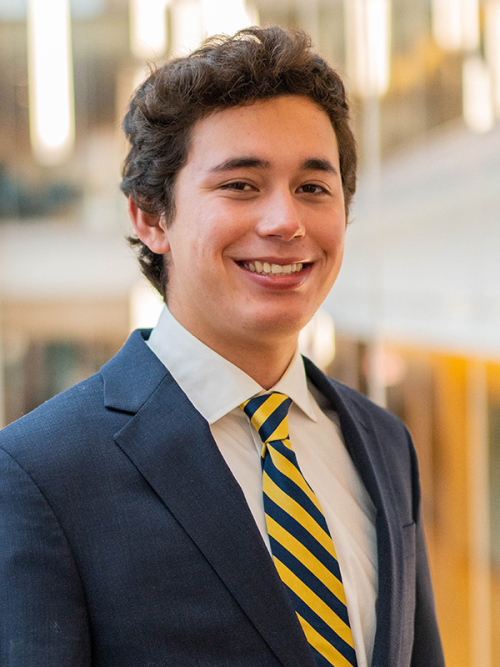
Drew Cox is also working with the Bailey Park Neighborhood Development Corporation, alongside Bazzi. One of the park’s main projects is the Neighborhood Revitalization, Beautification & Support Initiative, which aims to make Bailey Park a center for the community.
“We have identified pertinent issues in the community that need addressing, like improving the public transportation and infrastructure layout of the community, creating an emergency management system response to issues like basement flooding or extreme heat, and establishing an energy efficiency resource guide that outlines how to improve energy efficiency, home comfort, and savings on utility bills,” he said.
Cox grew up in a historic, wooded area of Pennsylvania. However, as he got older, he said he could feel the suburban sprawl. “During the first Trump administration, when major backlash toward environmental regulation and stewardship began, a fire was lit under me. I went to the University of Michigan for undergrad, when it announced its commitment to carbon neutrality. That led me to work in energy and sustainability consulting in San Francisco and Denver for two years and, ultimately, led me back to Michigan Law to pursue a career in renewable energy project finance.”
At Michigan Law, Cox has been part of the Environmental Law and Sustainability Clinic and the Public Utility Regulatory Initiative, a pro bono project on campus that he co-chairs. In his Dow Fellowship, Cox said it’s been great to interact with graduate students from multiple disciplines and leverage their unique skills and knowledge for one cause.
Liesl Bogaard, 3L
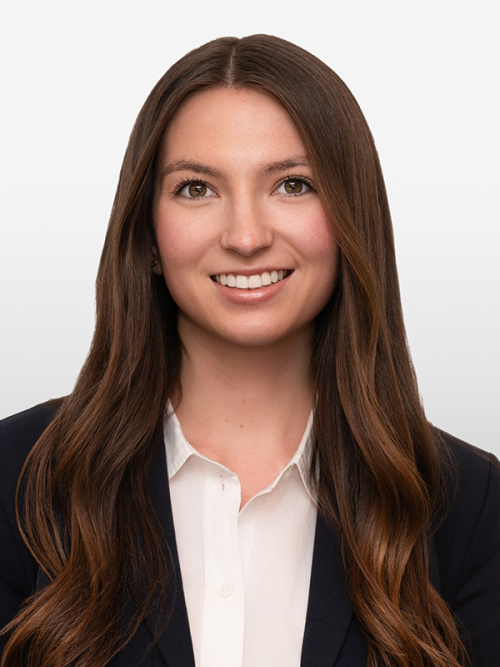
Liesl Bogaard is helping advise the City of Ferndale, Michigan, on its sustainability programs and will provide the city with work products and deliverables at the end of her fellowship.
“From a legal perspective, my role has been primarily centered on policy,” she said. “My group has also focused on updating the stormwater vulnerability planning, providing educational materials, and conducting research for the community of Ferndale to help them continue to shape stormwater management policies.”
Having grown up in a small town on a farm in Washington State, Bogaard’s love for the environment developed early on.
“My parents are huge environmentalists; my dad works in salmon conservation, and my mom bought a piece of abandoned property and started a farm from scratch,” she said. “Both have been an important part of my parents’ relationship and my relationship with them. As a family, we practiced many traditional farming styles: different types of crop rotation and synergistic farming. Minimizing harm is one of the most important things, and my parents taught me that.”
At Michigan Law, Bogaard has served as a co-chair of the Environmental Law Society and a production editor on the Michigan Journal of Environmental and Administrative Law—now its managing editor. She also was a student-attorney in the Environmental Law and Sustainability Clinic.
Through her Dow Fellowship, Bogaard said she is most excited to learn how local governments operate. “I want to see what sort of resources Ferndale is working with; who the stakeholders are; and the factors they need to be aware of when making decisions, whether that’s financial, cultural, or legal.”
Simran Kadam, 3L
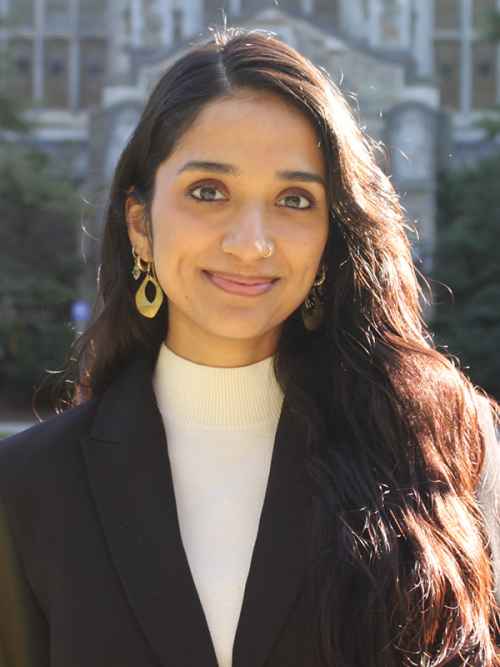
Simran Kadam is working with Refugee Garden Initiatives, a Michigan-based nonprofit organization whose mission is to create spaces for education, wellness, and storytelling related to food sovereignty. Led by Phimmasone Kym Owens, a refugee herself, the organization grew out of her hardships coming to America and the relief she found through gardening.
“She hopes to merge these two passions of hers and create a space that addresses the currently existing gaps in food access and representation and support in these systems,” said Kadam of Owens. “The farm, located between Ann Arbor and Ypsilanti, is the focus of her organization.”
Kadam grew up in Portland, Oregon, surrounded by nature. Environmental studies have remained a priority throughout her high school, undergraduate, and now graduate education.
She served as co-chair of Michigan Law’s Student Animal Legal Defense Fund last year and currently serves as the environmental justice co-chair of the Environmental Law Society. Through the fellowship, she looks forward to learning how to be a strong community organizer and ally to local organizations.
“Lawyers have a specific role to play [in environmental issues], and that role comes with a lot of power; we’re very much a part of the institution,” she said. “For good reason, local community organizations or individuals may have distrust towards institutions because that trust hasn’t been earned. I want to learn how to help build bridges and make connections because you need trust to get any sort of substantive work done.”
Joshua Messe, 3L
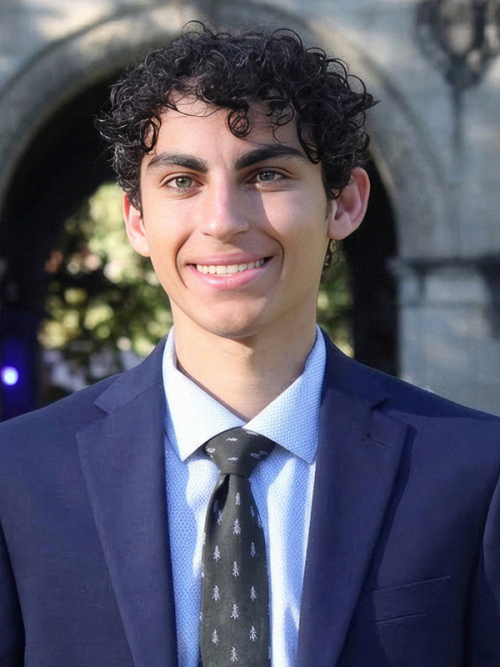
Joshua Messe is working with the Wayne County Sustainability and Innovation Division, researching a small number of carbon-intensive facilities, referred to as “super emitters,” in Michigan’s most populous county.
“Wayne County has a very top-heavy industry in terms of emitters, but we don’t have a ton of data on them,” he said. “The first part of the project is to gather data about the super emitters, then conduct a feasibility analysis—legally and economically—of instituting a cap-and-trade system at the county or state level.”
Messe grew up in Southern California, where he witnessed a major drought change much of the landscape he knew and loved. “I’ve always wanted to do some sort of work that can help make positive change in the environment and the way people interact with the environment. Going to school to study environmental law made perfect sense for me.”
At Michigan Law, Messe has served as the communications chair for the Environmental Law Society and as a junior editor—now managing notes editor—for the Michigan Journal of Environmental and Administrative Law.
“It’s been really great to work with students at other schools within the university,” he said of his fellowship. “Interacting with other interdisciplinary groups has helped broaden my perspective and understanding of how to address environmental issues more thoroughly. It’s also a great way to jumpstart my career.”