
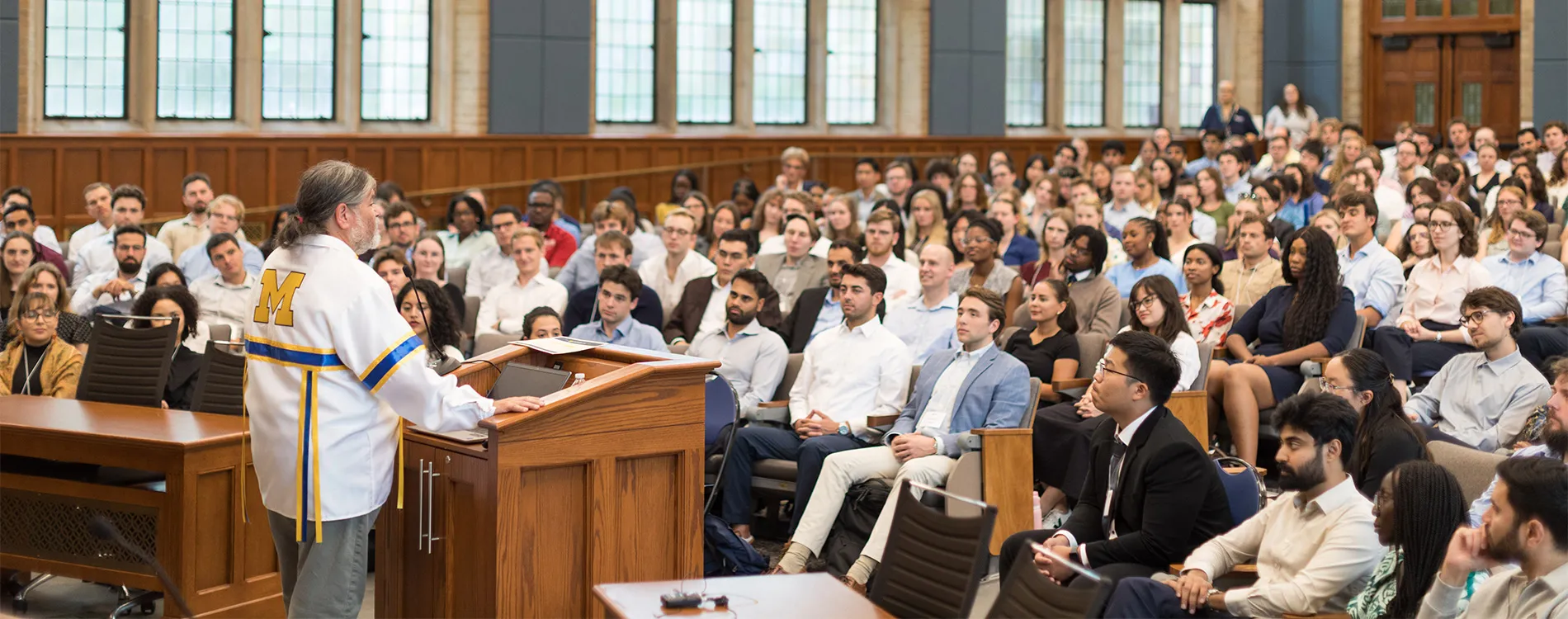
There aren’t many places where a financial analyst, an aquatic biologist, and a circus school graduate would cross paths on a daily basis. But Michigan Law isn’t like other places. For these and 340 other members of the incoming JD Class of 2028, Michigan Law is their common denominator and their academic home for the next three years.
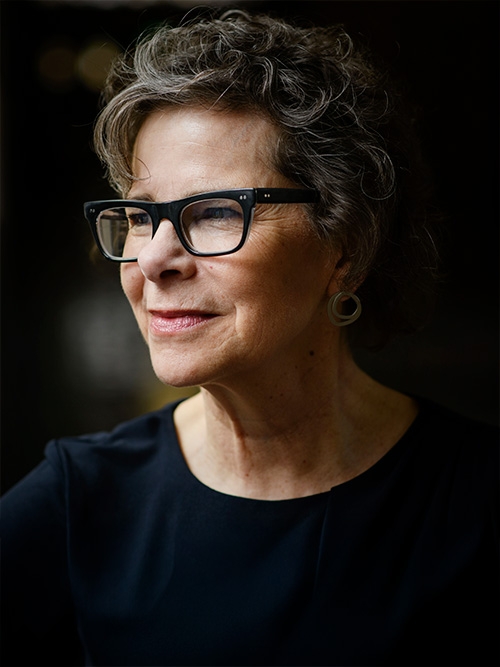
“The class is full of incredibly interesting people,” said Sarah Zearfoss, ’92, senior assistant dean for admissions. “It wasn’t until the whole admissions season wrapped up and classes started that I could step back to appreciate exactly how interesting they are, both individually and as a group.”
Speaking merely in numerical terms, the Class of 2028 is impressive, starting with 9,000 applications from aspiring students, a 33 percent increase from the previous year and the highest number in the school’s 166-year history.
Zearfoss told the Wall Street Journal in March that “the whole room gasped” when she shared application numbers with the faculty during a late fall meeting.
But beyond the numbers are the impressive backgrounds of class members. Paralegals make up the largest share of students, about one-fifth. Students also come from occupations outside the law, including a loan officer for the SBA, an administrator for a deep fake technology company, a FEMA supervisor, and a government affairs specialist at the Financial Industry Regulatory Authority (also voted class clown in college).
One class member won a gold medal for indoor skydiving while another was a parachutist for the US Navy and yet another was a professional soccer goalie. One lived with Francisco Franco’s granddaughter while on study abroad in Spain, and another plays six instruments and was the drum major for the UCLA Bruin Marching Band.
As these students start a new academic year, there’s no rest for Michigan Law’s admissions team. In the next few months, the cycle starts again.
“I’m feeling excited to start a new admissions season,” said Zearfoss, “and meet yet more amazing people who want to be lawyers.”
Read further for a statistical profile of the Class of 2028 and individual profiles of just a few members of this cohort of students.
Class of 2028 Academic Information
Applied
9,000
Enrolled
343
Median GPA
3.88
Median LSAT
171
Majors Represented
63
One or more years off after undergrad
80%
Most Popular Undergrad Majors
- Economics
- English
- Environmental sciences
- History
- International studies
- Philosophy
- Political science
- Psychology
- Public policy
Class of 2028 Demographics
Racial Composition
- Asian American 20.1%
- Black/African American 11%
- Latinx 8.7%
- Native American 3.5%
- White 59.1% (including Middle Eastern/North African 4.9%)
- Not Indicated <1%
- Multiracial 13.1%
Percentages include students who identify in more than one category.
Median Age
24.8
Age Range
21-43
First-generation college graduate
10%
Gender Composition

Women
50.4%
Men
47.8%
Nonbinary or other genders
1.7%
LGBTQ+
27.6%
Class of 2028: Where are they from?
Michigan Residents

22.1%
States Represented

44
Plus Washington, DC
Countries Represented

20
Top Undergrad Schools
- Brown University
- Carleton College
- Cornell University
- Michigan State University
- Ohio State University
- Tufts University
- University of California, Berkeley
- University of California, Los Angeles
- University of Chicago
- University of Florida
- University of Michigan
- University of North Carolina
- University of Texas
- University of Virginia
- University of Washington
- Yale University
Meet a few of our students
Ken Alyass
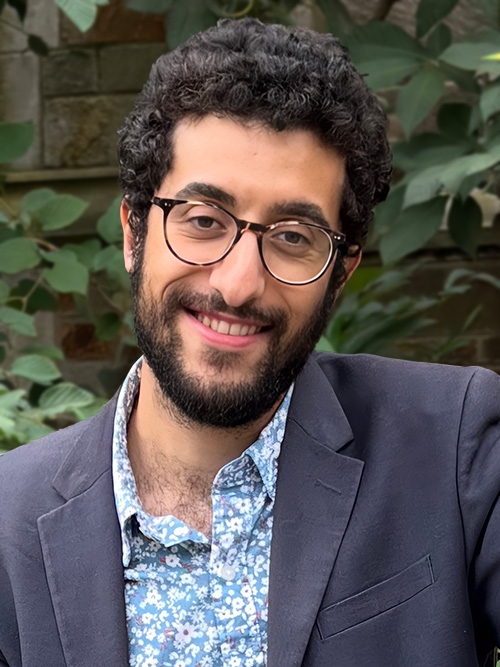
Ken Alyass worked as a policy analyst at the Rand Corporation, researching something completely out of his wheelhouse: existential risk around artificial intelligence. Think iRobot and Terminator. A historian by trade, he translated the usefulness of historical analysis to the engineers and scientists who thought of history as a background information.
After working the last six years on a PhD in history at Harvard, the native Michigander is happy to be home.
“Michigan Law is amazing,” he said. “From the faculty to the students, everyone has been kind and inviting. I never experienced that in graduate school. Plus, being at such a massive university with huge archives means that I can continue some of my historical research. But the biggest reason? The Law Quad.”
As for future goals, he’s thinking large: He wants to fix democracy. “In my personal statement to the Law School, I wrote about how my parents came to the United States from Iraq in search of many different kinds of freedom: political, financial, social,” he said. “They came here in search of freedom, but now that our democracy is under enormous pressure, I have realized that my duty is to help protect and expand that very freedom.”
Emily Bell
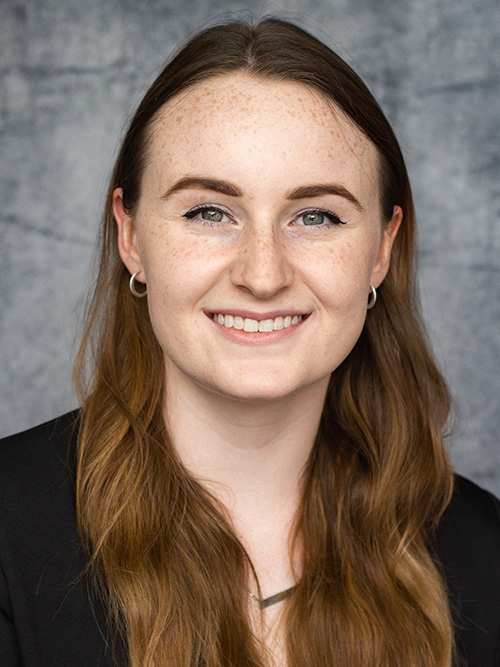
Before law school, Emily Bell worked as a paralegal for an intellectual property firm in Chicago. Whether it was drafting documents or filing them in multiple federal district courts, she gained immensely valuable experience working on cases for brands such as Birkenstock, Ralph Lauren, and Barbie.
“We primarily brought schedule A cases against China-based web sellers, using joinder to sue many defendants at a time,” she said. “It was very interesting to learn about the ways that litigation changes based on the location and modes of operation of the defendants as well as what criteria must be met to bring a federal suit against anonymous online sellers.”
She sees Michigan Law—her “dream school” thanks in part to the snowy winters—as a natural progression for her career, which started with her aerospace engineering studies as an undergrad.
“In pursuing aerospace engineering, I was entertaining a love for logical reasoning, math, and science. While it wasn’t what I wanted to do long-term, I see very clear connections between the mathematical and logical systems of engineering and the way the law operates and is interpreted.”
Bridgette Lauren Cervantes
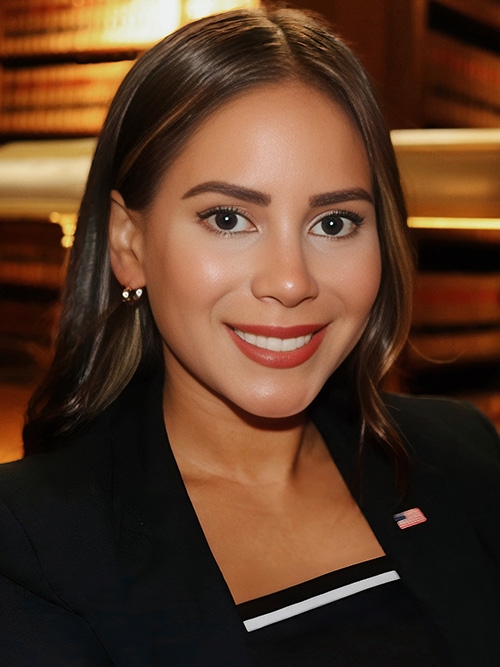
As a crisis response nurse, Bridgette L. Cervantes worked in hospitals across the US that experienced staffing shortages during labor union strikes. She primarily assisted in neonatal intensive care units, providing specialized care for patients as well as their families.
“This required adapting to unfamiliar units, new teams, and diverse policies, often with only a 24-hour turnaround time while upholding the highest standards of medical care,” she said. “It was deeply rewarding.”
She drew on the skills gained during her service as a medical officer in the US Air Force. Her domestic and overseas experiences in the Asia-Pacific region, she said, reinforced her belief that advocacy extends beyond the bedside to the broader systems governing health care. It was a key factor inspiring her decision to pursue a career in the law. She looks forward to studying at Michigan Law not only to earn an excellent legal education but also to collaborate with fellow students.
“I am very proud and very happy to be a member of this community,” she said. “As I trade in my scrubs for suits, I recognize that it is a truly great time to be studying the law.”
Edward McKinley
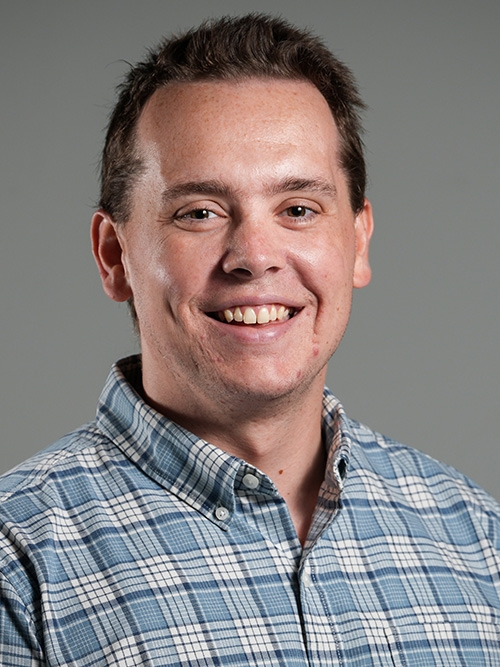
During the span of his career as a journalist, Edward McKinley reported on a variety of issues, from the pandemic to the 2024 presidential campaign. But he is most proud of his investigative reporting that contributed information to the public record that otherwise would not have existed.
For example, he revealed how an influential lobbyist in Missouri had organized a secret crusade to change the way college campuses investigated sexual assault after his own son had been expelled. In New York, the former longtime bishop of the Albany Roman Catholic Diocese acknowledged a decadeslong practice of covering up child sexual abuse cases after McKinley confronted him. And in Texas, a lawmaker read from his story revealing persistent practices of real estate self-dealing at charter schools as the state House voted to strengthen transparency and accountability laws.
McKinley was most motivated by the profession’s public service mission: to comfort the afflicted and afflict the comfortable, and to spur societal change by highlighting injustice.
“I still believe in the mission of journalism and want to push for better governance and an improved society,” he said. “But I now believe I’ll be better equipped to do so by sharpening my research, writing, and critical thinking skills at Michigan Law and learning to leverage the legal system.”